The best santoku knives balance a manageable blade with the edge and handle features that suit your everyday prep. These six options range from compact, sheath-equipped designs to 7-inch knives with hollow edges and different steel constructions.
Quick Top Products
imarku 7-Inch 10Cr15CoMoV Santoku
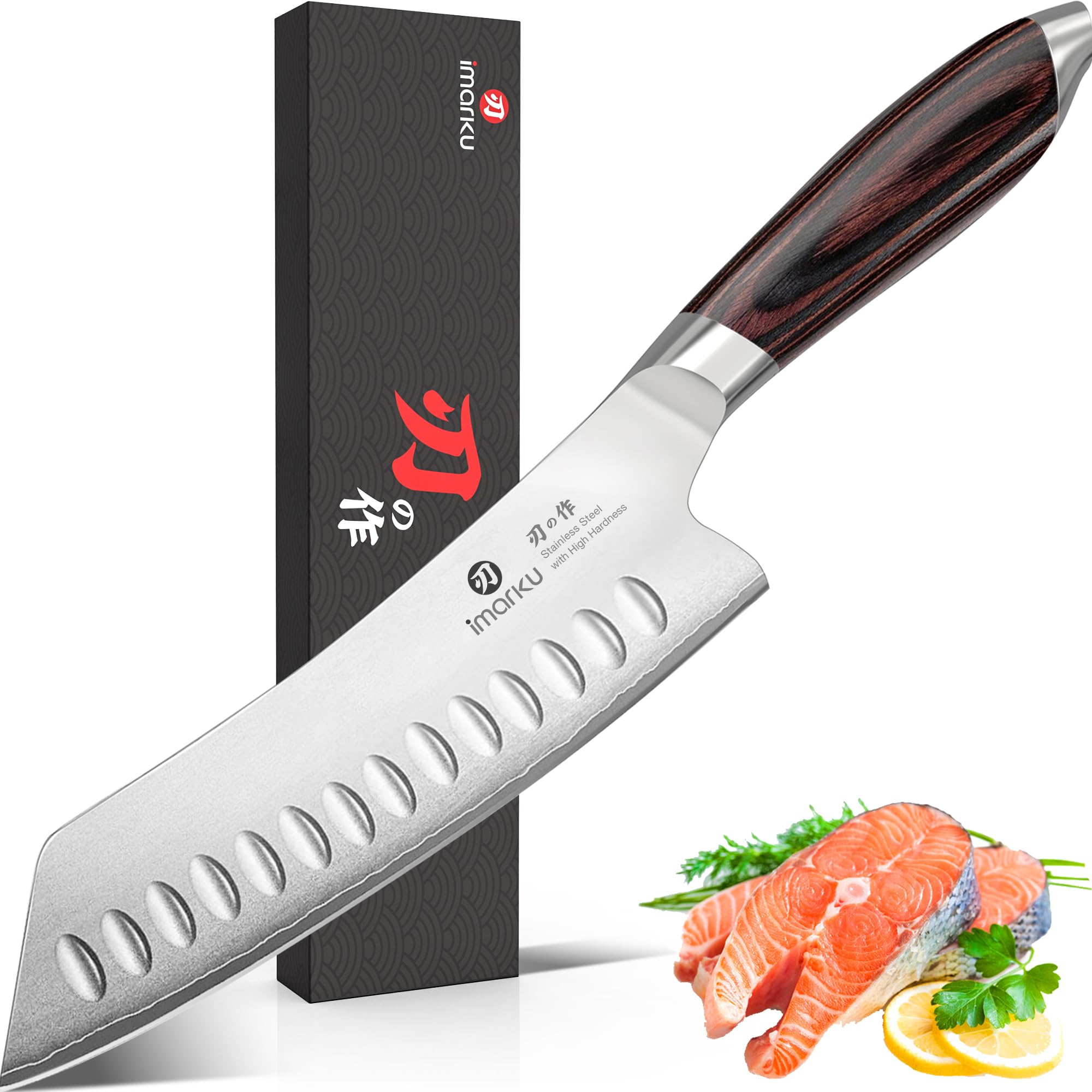
- 7-inch blade with a 10Cr15CoMoV core and stainless steel cladding.
- Hollow-edge dimples and a sandblasted face are designed to limit food sticking.
- Raised Pakkawood handle offers added knuckle clearance.
Best For: Home cooks who want a 7-inch knife with clad steel, a Pakkawood handle, and dimples intended to reduce sticking.

Zyliss Comfort 5.9-Inch Santoku
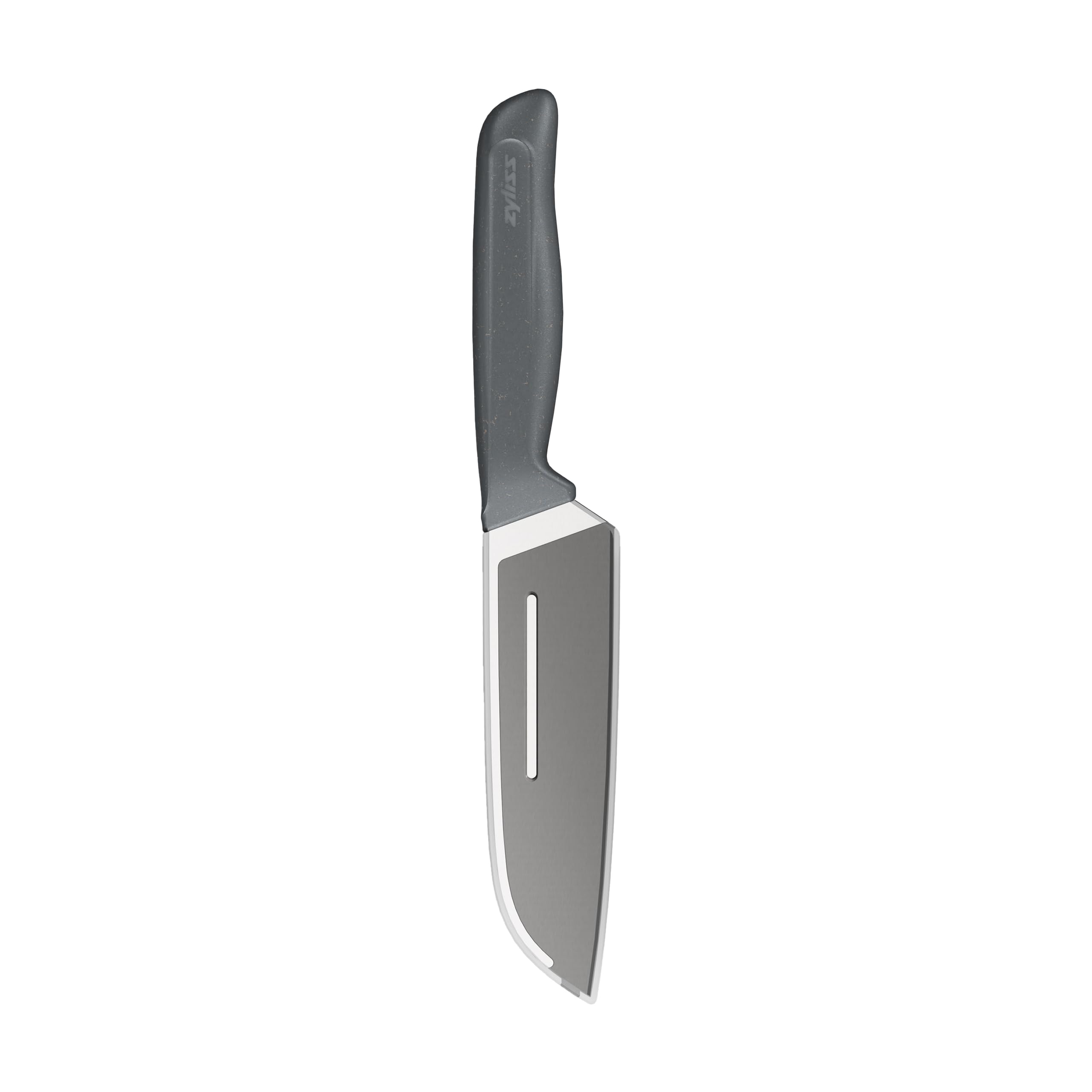
- 5.9-inch Japanese stainless steel blade.
- Protective sheath supports covered storage and camping use.
- Contoured, non-slip handle has finger indents and is designed for wet-hand control.
Best For: Cooks who prefer a shorter santoku and want a blade guard for drawer storage or camping.
KEEMAKE 7-Inch Santoku
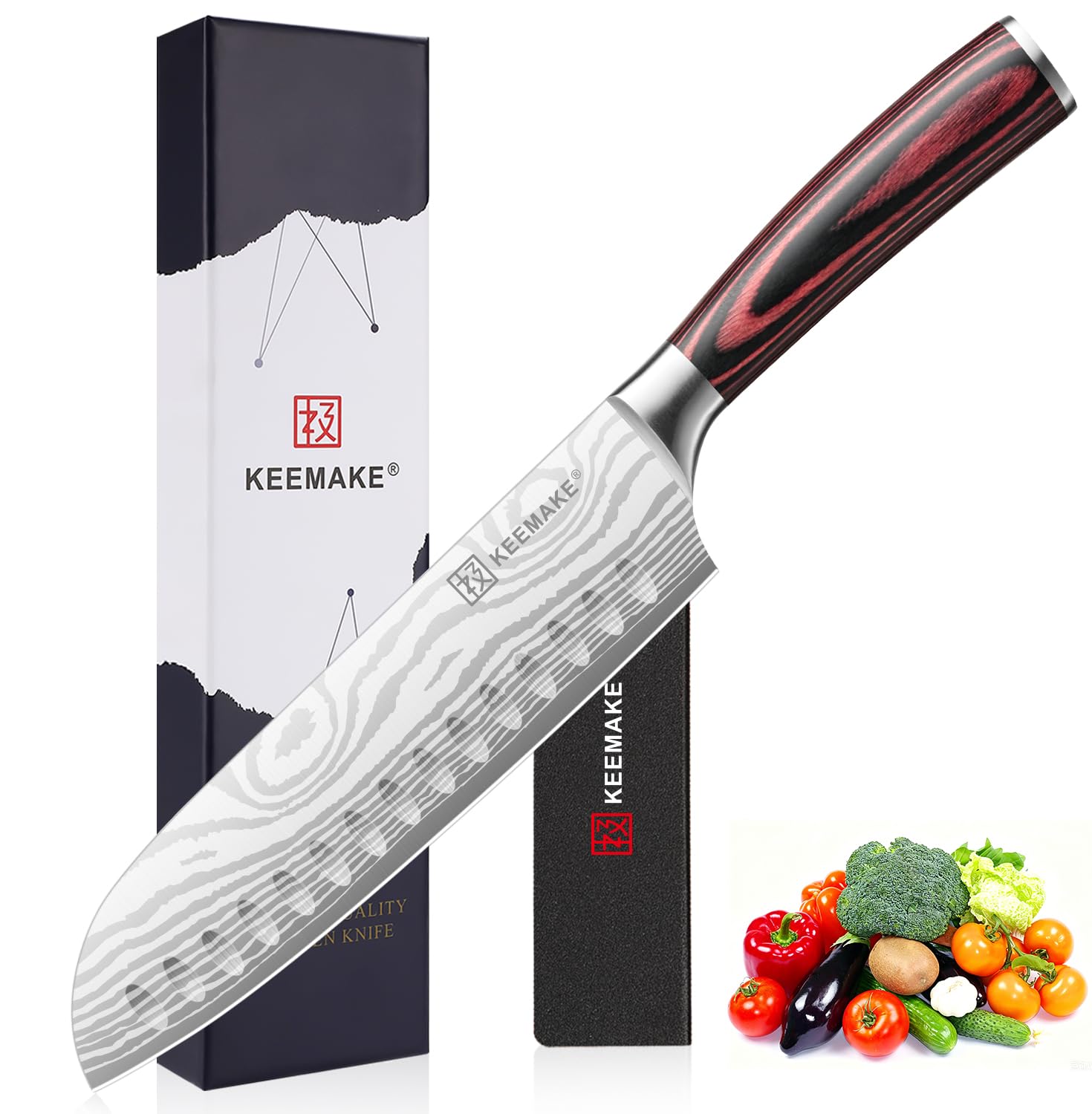
- 7-inch 1.4116 high-carbon stainless steel blade with 58 HRC hardness.
- Stated weight is 8.16 ounces; edge is hand-sharpened to 12–15 degrees per side.
- Wave-patterned blade and shaped Pakkawood handle.
Best For: Cooks seeking a 7-inch santoku with a stated 8.16-ounce weight and a wave-patterned blade face.
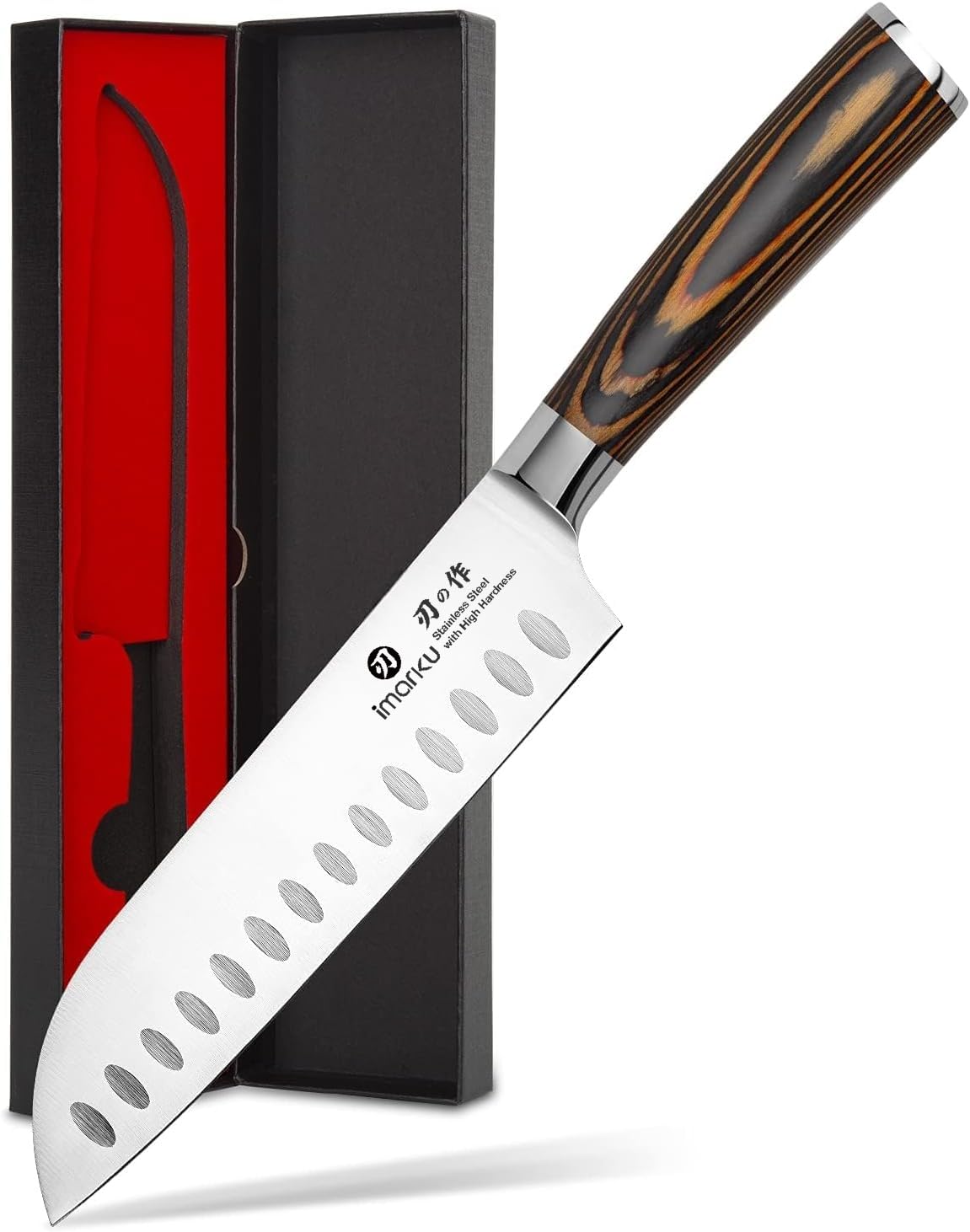
imarku 7-Inch Santoku
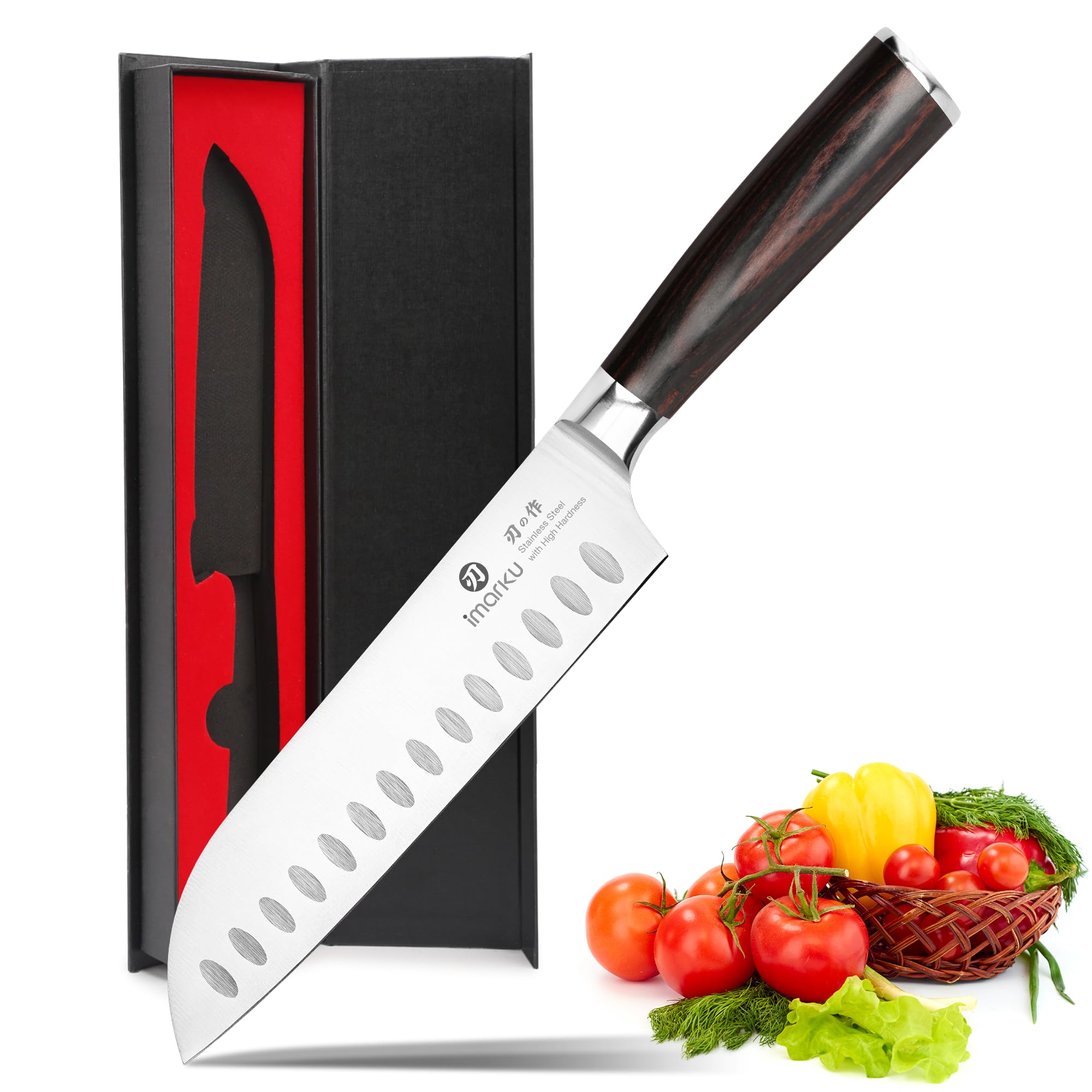
- 7-inch blade is 2.5 mm thick, with a 15–18-degree-per-side edge.
- Hollow-edge design is intended to reduce food sticking.
- Pakkawood handle and black gift box.
Best For: Cooks who want a 7-inch santoku with a hollow edge and gift-box presentation.
imarku 7-Inch Santoku, Blue Handle
- 7-inch, 2.5 mm-thick German high-carbon stainless steel blade.
- Hollow oval edge on both sides is intended to reduce sticking.
- Blue ergonomic Pakkawood handle; edge is 15–18 degrees per side.
Best For: Cooks who want a 7-inch santoku with a blue handle and hollow-edge blade.
Clad Steel and Hollow-Edge Design
imarku Japanese Santoku Knife 7 Inch, 10Cr15CoMoV 3-Layer Stainless Steel
This imarku santoku pairs a 7-inch blade with a 10Cr15CoMoV stainless steel core and protective stainless steel cladding. Its edge is honed to 12±2 degrees per side, and the knife has a 59±2 HRC hardness rating.
The hollow-edge dimples and sandblasted blade face are designed to reduce drag when slicing moist or starchy foods. A raised Pakkawood handle provides knuckle clearance, while the 12.23-inch overall length gives it a substantial feel.
It suits cooks who want a full-size everyday prep knife and are comfortable caring for a clad steel blade.
Best For: Home cooks who want a 7-inch knife with clad steel, a Pakkawood handle, and dimples intended to reduce sticking.
| Pros | Cons |
|---|---|
|
|
Choose this model if you want a 7-inch santoku with a specified steel core, cladding, and hollow-edge dimples. Its raised handle also addresses knuckle clearance during board work.
The 12±2-degree-per-side edge is a relatively acute angle, so check the recommended sharpening and honing method before buying. If compact storage or a protective sheath is a priority, the smaller Zyliss is the more directly equipped option.
Compact Blade with Protective Sheath
Zyliss Comfort Knife - Japanese Stainless Steel Blade - Non-Slip Contoured Handle for All Hand Sizes - Kitchen Tools with Safety Kitchen Blade Guards - Dishwasher Safe - 5.9" Santoku Knife
The Zyliss Comfort santoku has a 5.9-inch Japanese stainless steel blade, making it the shortest blade in this group. Its protective sheath is useful for covered drawer storage and carrying the knife for camping.
The contoured, non-slip handle has finger indents and is designed for control with wet hands and a range of hand sizes. Those details make it a practical choice for smaller prep areas or cooks who prefer a shorter blade.
Its compact reach trades some cutting length for easier handling and storage compared with the 7-inch options.
Best For: Cooks who prefer a shorter santoku and want a blade guard for drawer storage or camping.
| Pros | Cons |
|---|---|
|
|
Pick the Zyliss if storage and portability shape your decision. It is the only option here with an included sheath, and its 5.9-inch blade is shorter than the other identified santokus.
The wet-hand grip details may also suit cooks who handle ingredients at a sink or grill-side prep station. Confirm the sheath fits your storage setup and consider whether the shorter blade provides enough length for your usual batch of vegetables or boneless cuts.
Lightweight 7-Inch Push-Cut Profile
KEEMAKE 7" Santoku Knife, Razor Sharp Chef Knife with Ergonomic Handle
The KEEMAKE uses a 7-inch blade made from 1.4116 high-carbon stainless steel, hardened to 58 HRC, with a hand-sharpened edge of 12–15 degrees per side. Its stated weight is 8.16 ounces, which may appeal if a heavier knife feels tiring during routine prep.
The profile is described as supporting push cuts and board contact, with a gently curved tip for limited rocking. A wave-patterned blade is intended to reduce friction and food sticking.
The Pakkawood handle completes a compact alternative to a larger chef knife for vegetables, fish, poultry, and boneless meat.
Best For: Cooks seeking a 7-inch santoku with a stated 8.16-ounce weight and a wave-patterned blade face.
| Pros | Cons |
|---|---|
|
|
The KEEMAKE stands out for its stated 8.16-ounce weight and the combination of a flatter cutting profile with a gently curved tip. It can suit cooks who mostly push-cut vegetables but sometimes rock through herbs or garlic.
Compare its 12–15-degree edge and 58 HRC hardness with the imarku models if edge geometry is a deciding factor. Check care guidance for the Pakkawood handle before choosing it for a kitchen where knives commonly go into the dishwasher.
Hollow Edge and Gift-Box Presentation
imarku Chef Knife 7 Inch Kitchen Knife Ultra Sharp Santoku Knife - High Carbon Japanese Chefs Knife, Kitchen Gadgets 2025, Apartment Essentials, Birthday Gifts for Him Her, Best Gifts for Women Men
This imarku santoku has a 7-inch, 2.5 mm-thick high-carbon stainless steel blade with a hand-polished edge of 15–18 degrees per side. Its hollow edge creates gaps intended to reduce sticking as you slice, dice, or mince.
The Pakkawood handle is shaped for a secure grip, and the knife comes in a black gift box. Its everyday uses include preparing meat, vegetables, fruit, and bread.
The provided facts do not specify a particular steel grade or hardness, so this is a straightforward option for shoppers focused on blade length, hollow-edge design, and handle shape rather than detailed metallurgy.
Best For: Cooks who want a 7-inch santoku with a hollow edge and gift-box presentation.
| Pros | Cons |
|---|---|
|
|
Consider this imarku if you want a 7-inch santoku with a specified blade thickness and hollow-edge design, plus gift-ready packaging. Its 15–18-degree-per-side edge is a useful comparison point against the 12±2-degree imarku model and the 12–15-degree KEEMAKE.
The facts do not give this knife a steel grade or hardness, so buyers who prioritize those details may prefer an option with those specifications. Confirm care guidance for the Pakkawood handle.
Blue Ergonomic Handle
imarku Santoku Knife, 7 inch Kitchen Knife Ultra Sharp Cooking Knife Japanese Chef Knife -High Carbon Stainless Steel - Ergonomic Pakkawood Handle, Gifts for Women/Men, Orange
This imarku offer is a 7-inch santoku with a blue ergonomic handle and a hollow oval edge on both sides of the blade. Its German high-carbon stainless steel is 2.5 mm thick, and the hand-polished edge is specified at 15–18 degrees per side.
The handle is described as Pakkawood and shaped to reduce grip pressure. The knife is intended for chopping, slicing, dicing, and mincing a range of everyday ingredients.
Its distinctive color may help it stand out in a kitchen, while the hollow-edge design is intended to reduce food sticking during cuts.
Best For: Cooks who want a 7-inch santoku with a blue handle and hollow-edge blade.
| Pros | Cons |
|---|---|
|
|
This model shares its 7-inch size, 2.5 mm blade thickness, 15–18-degree edge, hollow-edge design, and Pakkawood handle with the other imarku santoku here. Its clearest distinguishing feature is the blue handle.
Since the two offers have nearly the same specified construction and use, choose based on the handle color and verify the exact variant you want. If you prefer more detailed steel specifications, the clad imarku or KEEMAKE offers those.
How to Choose Santoku Knives
How We Picked Santoku Knives
This selection focuses on knives explicitly identified as santokus, with blade lengths, edge designs, and grip details that help distinguish their everyday prep roles. The four included knives cover two 7-inch imarku options, a 7-inch KEEMAKE, and a shorter 5.9-inch Zyliss.
The HexClad offer was excluded because its details identify a 3.2-inch pairing knife rather than a santoku.
Within the group, steel and edge specifications separate the choices. The clad imarku and KEEMAKE provide steel grades and edge angles, while the other imarku offers specify blade thickness and a 15–18-degree-per-side edge.
Grip shape, hollow-edge patterns, and the Zyliss sheath add practical differences for board work and storage.
Comparing Santoku Knives by Blade and Edge
Blade length is a useful starting point. The 5.9-inch Zyliss is the compact choice for smaller prep spaces or covered storage, while the 7-inch options provide more reach for repeated slicing and chopping.
The KEEMAKE also has a stated weight of 8.16 ounces, a helpful point of comparison if handling weight matters to you.
Edge details vary: the clad imarku has a 12±2-degree-per-side edge, the KEEMAKE has a 12–15-degree edge, and the other two 7-inch imarku offers specify 15–18 degrees per side. These figures describe different edge geometries, not a guaranteed difference in cutting performance.
The imarku and KEEMAKE blade patterns are intended to reduce sticking; the Zyliss instead emphasizes grip and a protective sheath.
| Product | Standout features | Best for |
|---|---|---|
| imarku 7-Inch 10Cr15CoMoV SantokuCheck Price |
| Home cooks who want a 7-inch knife with clad steel, a Pakkawood handle, and dimples intended to reduce sticking. |
| Zyliss Comfort 5.9-Inch SantokuCheck Price |
| Cooks who prefer a shorter santoku and want a blade guard for drawer storage or camping. |
| KEEMAKE 7-Inch SantokuCheck Price |
| Cooks seeking a 7-inch santoku with a stated 8.16-ounce weight and a wave-patterned blade face. |
| imarku 7-Inch SantokuCheck Price |
| Cooks who want a 7-inch santoku with a hollow edge and gift-box presentation. |
| imarku 7-Inch Santoku, Blue HandleCheck Price |
| Cooks who want a 7-inch santoku with a blue handle and hollow-edge blade. |
Choosing a Santoku for Your Prep Space
Think about how much blade you want to manage at the board. A shorter santoku can feel more convenient in a tight kitchen, while a 7-inch blade suits cooks who want greater reach for batch prep.
Handle shape also matters: the clad imarku has a raised handle for knuckle clearance, the KEEMAKE has a shaped Pakkawood handle, and the Zyliss uses a contoured grip with finger indents.
If you prep near a grill or carry a knife to a campsite, the Zyliss sheath is a clear storage feature. For home use, consider where the knife will live and whether a blade guard is part of your routine.
The other models do not specify a sheath, so check what storage protection you prefer before buying.
Steel, Handle, and Care Considerations
The KEEMAKE identifies 1.4116 high-carbon stainless steel and 58 HRC hardness. The clad imarku identifies a 10Cr15CoMoV core, stainless cladding, and 59±2 HRC.
The remaining imarku listings identify high-carbon stainless steel but do not provide a grade or hardness in the supplied details. Use the listed specifics to compare sharpening preferences, and check care instructions for any Pakkawood handle.
A santoku is often used for produce, boneless meat, fish, and herbs, but the right blade still depends on your cutting motion and board space. The KEEMAKE profile supports push cuts with limited rocking; the other selected knives are described for general slicing, chopping, dicing, or mincing.
Match those details to the way you prep most often rather than relying on the knife label alone.
Who Should Buy Which Santoku Knife?
Choose the Zyliss if a compact blade and included sheath are central to your decision. The KEEMAKE suits shoppers who value a stated weight and a specified steel grade and hardness.
The clad imarku combines a 7-inch blade with cladding, a raised handle, and a specified edge angle.
The other 7-inch imarku is a straightforward fit if hollow-edge design and gift-box presentation matter to you. The blue-handle imarku has overlapping specifications, with color as its most apparent distinction.
Before choosing between them, check the precise variant and care instructions, then compare blade length, grip, and storage needs against your regular prep routine.